Back
Automotive & aerospace

The silence of the engine

Acoustic radiation of vibrating surfaces in electric drive systems

The growing electric and hybrid vehicles market faces new demands on product acoustic quality. The acoustical emission behavior of electric drivetrains is clearly different from that of conventional drives. The IPEK – Institute for Product Engineering at the Karlsruhe Institute of Technology (KIT) examined these phenomena.


Drive comfort is a significant decision-making criterion when purchasing a vehicle. The acoustic quality plays a prime role especially for vehicles with electric drivetrains, because the sound is not masked by a running combustion engine (figure 1)
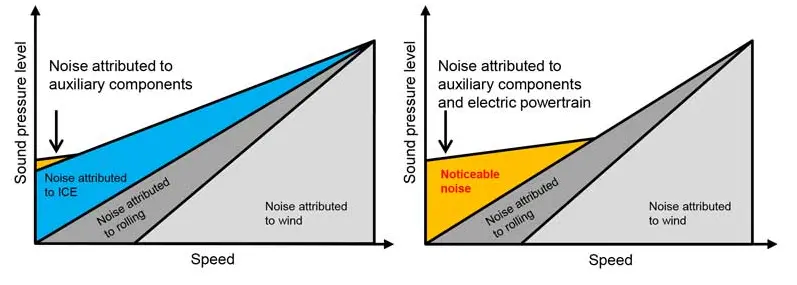
Figure 1: Schematic illustration of the background noise that changed as a result when a combustion engine was not used

One challenge with the interior noise of a vehicle is that methods and experiences are lacking with regard to the excitation of noise and its transmission mechanisms. Another is that with electric and hybrid drive systems, depending on the topology of the specific electric motor and the drivetrain, higher orders and therefore tonal components of the interior noise become apparent and need to be addressed during the development.

Another difference is the much higher rpm range of electric motors as compared to combustion engines. As a consequence, the excitations caused by an electric motor are in general at higher orders, resulting in higher excited frequencies (figure 2).
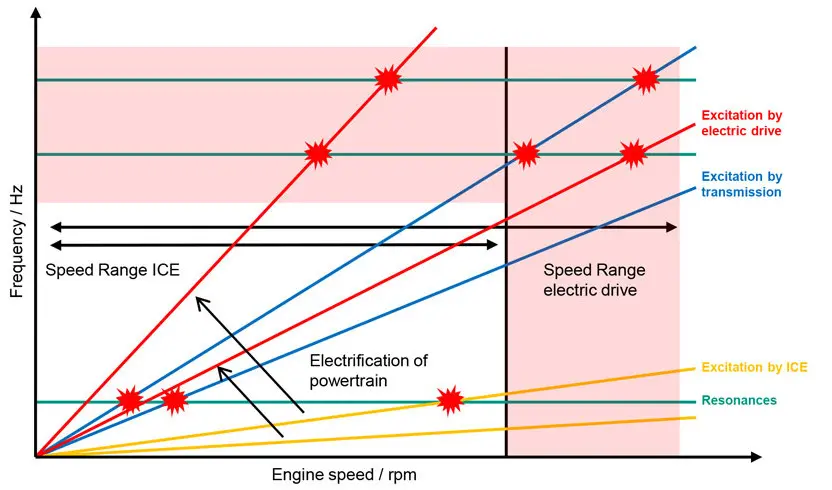
 

Figure 2: Acoustic conflicts and challenges related to the substitution of a combustion engine.

Due to these conflicts, the electric drive requires a re-evaluation and examination for each vehicle. (figure 3).

In order to evaluate the acoustic quality of the interior noise of electric vehicles, it is critical to analyze the acoustic power emitted by the drivetrain in the frequency range from 20 Hz to approximately 16 kHz. It’s then possible to estimate the noise contribution of the drivetrain – in combination with the structure-borne noise transferred into the car body – to interior vehicle noise.

In terms of the machine- acoustic base equation, the emitted acoustic power is directly correlated with the square of the velocity normal to the radiating surface. Therefore – under the simplifying assumption of a constant radiation factor – the acoustic radiation of a drivetrain or the individual components can be approximated and validated by the measured surface velocity. The definition of limit values on the basis of the surface velocities offers several advantages.
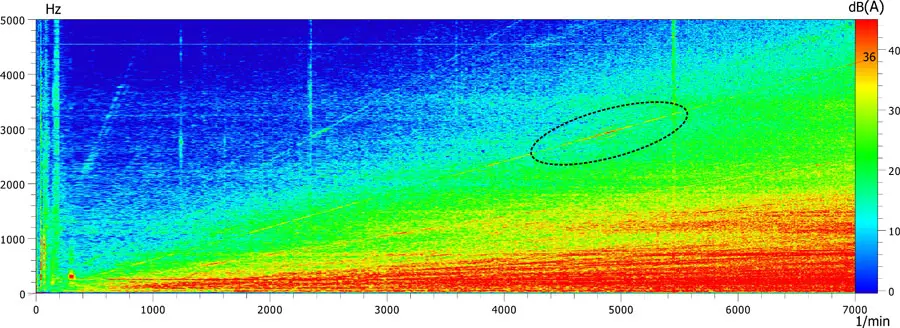
 

Figure 3: In general, the excitations of an electric motor with higher rpm ranges are of an essentially higher order than the excitations of combustion engines.


Surface velocities can be measured reliably and reproducibly on test benches that do not need to be anechoic. Secondly, this procedure allows the contribution of the individual subsurfaces to the total noise to be calculated, enabling an analysis of the excitation and sound path on the structural level.

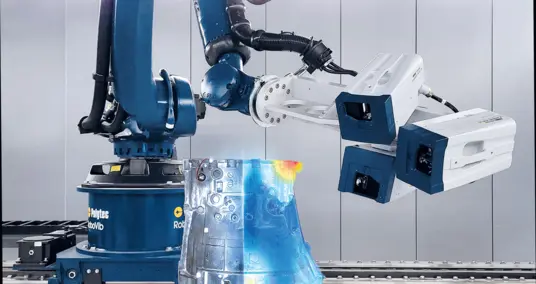
3D Scanning Vibrometers are used to capture surface velocities without contact with high local resolution made possible by the Laser Doppler Principle. This is particularly advantageous for electric drive systems because higher frequencies are excited than in conventional drive systems.

As part of a research project, the IPEK – Institute for Product Engineering at the Karlsruhe Institute of Technology (KIT) carried out acoustic measurements in an anechoic drivetrain test cell. The acoustic characteristics of the electric drive train were examined.

In addition to acquiring and analyzing the electrical, mechanical and acoustic quantities, the surface velocities were examined on the drivetrain at critical operating points with a 3D Scanning Vibrometer. Attention was focused primarily on the electric motor and the gear mechanism.

Measurements showed elevations of the surface velocities analogous to the elevations of the acoustic pressure in the far field. During the examinations the researchers discovered by means of locally high-resolution surface velocities that the excitation of the structure deriving from the electric motor is emitted mainly by the coupled gear.

Prof. Dr.-Ing. Albert Albers, Head of the IPEK summarizes:

The validation of technical systems at each phase of the development process is a central issue in the product development. For this purpose, the IPEK is developing the X-in-the-Loop Framework (XiL), a method for the universal and process-related validation of technical systems with focus on the vehicle respectively drive system development.

As part of a more in-depth analysis, the excitation and transmission mechanism of the structural vibrations could be further limited enabling further targeted examinations at the component level.

IPEK’s study proves that there is a strong correlation between the distribution of surface velocities and the acoustic pressure measured in the far field. The higher excitation frequencies of the electric drive with coupled gears are captured without any problems by the optical sensors that are characterized by high spatial resolution and a non-contact measuring principle.

The vibration measurement technology allowed IPEK to acquire the acoustic properties of the product without requiring any specific acoustic properties of the measuring room.


Images courtesy: Images courtesy of the authors unless otherwise specified. Cover image: ©istock.com/franckreporter

Our Authors

Dr.-Ing. Matthias Behrendt
Senior Engineer and Head of Research Department 1 IPEK – Institute of Product Engineering, Karlsruhe Institute of Technology (KIT)
www.ipek.kit.edu

Related Articles

Laser-Doppler-Vibrometer set standards in the development of electric drives

Electric machines are increasingly being used as the primary drive technology in vehicles. The acoustic behavior of the drive is a key factor in the perceived quality of electric vehicles. Numerical method…

5 min

On self-supporting and self-aligning compact shakers

Artificial excitation is the basis for various noise and vibration techniques, from experimental modal analysis, over transfer path analysis, load identification, simulation model correlation, hybrid model…

10 min

Focus on impact detection of micrometeorites

The commercialization of space exploration increases the need for innovative technologies for space and planetary exploration and satellite missions. To ensure the safety and reliability of space structure…

6 min

Laser vibrometer based acoustic performance evaluation from -40° to 85°C

The increase of touchscreen interfaces in automotive applications leads to a visual overload of information that has serious safety implications. Haptic feedback technology is seen as an opportunity to imp…

5 min

Inertial shakers for modal testing

If you would like to test the vibration behavior of an object that is not vibrating by its own, you have to excite it externally. For modal tests both an electromagnetic shaker and a modal hammer are commo…

6 min

How singing capacitors affect the audio experience in consumer electronics

Everybody enjoys good sound quality on a mobile device when watching a show or when communicating with friends and family or in a business environment. On the other hand, we cringe when something is off wi…

3 min

When to choose a laser Doppler vibrometer for vibration measurement

In the realm of vibration testing, a significant obstacle arises in the form of mass loading. The behavior of a dynamic vibration sample, or device under test (DUT), is profoundly influenced by the additio…

5 min

Frequency response function measurement using QTec® multi-path interferometry

The measurement of frequency response function (FRF) plays an important role for the dynamic characterization of structures. In most cases, the goal is the measurement-based analysis of a system or the det…

7 min

Analyzing operational deflection shapes on loudspeakers

Noise protection and control play a major role in both professional and private environments. Airborne sound measurements help identify acoustic paths as a means of noise reduction as standard testing meth…

4 min

Laser vibrometry visualizing haptic feedback

The smartphone has shown that buttons can be replaced without sacrificing comfort. The freely configurable display with gesture control has made it even easier to switch between applications. Hap2U drives …

7 min

Noise and modal analysis for quiet and reliable operation

The growth of the drone market is multi-faceted: growing concerns about national and border security drive the need for advanced aerial surveillance, package delivery services experience an increased deman…

6 min

Measurements using broadband piezoelectric excitation

The following article compares various forms of force excitation in order to determine the transfer admittances of mechanical systems using a gear wheel as an example. The objective is to analyze and asses…

4 min

Determining the dynamic characteristics of an aircraft’s large-scale, adaptive compliant wing slat section prototype

The SADE project studied “smart” morphing mechanical elements of next generation wings, which was aimed at improving aerodynamic performance, fuel efficiency, as well as reducing noise and emissions in all…

3 min

Experimental modal test with laser vibrometers

The validation of simulation models is an important application area of laser vibrometers. To do this, the geometric data from a finite element mesh is loaded into the software of the measurement system an…

4 min

3D scanning laser Doppler vibrometry for fuel-efficient turbines

Fuel consumption of aircrafts is a hot topic in the current discussion about global climate change. An important factor is the design of the aircraft engine itself. In order to reduce weight and build more…

6 min

Xtra 3D scanning vibrometry on rolling tires

Dynamic 3D operational deflection shapes captured with an Xtra Scanning Vibrometer help reveal the source of rolling tire noise. For a wide range of driving conditions, rolling tires stimulate a significan…

5 min
Load More