Back
General R&D
Automotive & aerospace
Civil & structural engineering
Materials research & NDT

Effects of mass loading

When to choose a laser Doppler vibrometer for vibration measurement 

In the realm of vibration testing, a significant obstacle arises in the form of mass loading. The behavior of a dynamic vibration sample, or device under test (DUT), is profoundly influenced by the additional mass applied to it. This phenomenon is particularly pronounced in vibrating cantilevered beams, and it becomes even more intricate when dealing with curved cantilevered beams like turbine blades. Accurate measurement of resonant frequencies in turbine blades using accelerometers is a complex endeavor, primarily due to mass loading. Remarkably, even the minutest accelerometers introduce a mass that disrupts the natural frequency of a turbine blade, making precise measurements a challenging feat.

One approach for avoiding the influence of mass-loading is to measure the turbine blade’s acceleration in a non-contact way using a laser-optical sensor, such as a laser Doppler vibrometer. In the below case study, a lightweight accelerometer (7.5 g) measures the resonant frequencies of a short turbine blade (20.4 g). The test data was again evaluated in the non-contact way using a Polytec vibration sensor VibroGo® (laser vibrometer). Vibration Research’s ObserVR1000 dynamic signal analyzer recorded the data.

Procedure

The laser vibrometer for this test operated in the velocity setting however it is capable of measuring direct displacement as well. Velocity is the preferred option because it offers a more consistent frequency response, thanks to the scaling factor that relates acceleration, velocity, and displacement. While acceleration increases with frequency and displacement decreases, velocity maintains a relatively stable response. The velocity setting was chosen to avoid any potential lag or inaccuracies in data processing.
For the test, a bandwidth of 1 kHz was considered. A velocity range of 1 m/s (peak) was considered optimal so as to not cause decoder saturation and hence overrange.

Finally, to optimize measurements, the laser vibrometer was positioned at an ideal stand-off distance. The vibrometer used had a basic stand-off distance formula of 463 mm + (183 mm * n). The vibrometer was placed at a distance of 877 mm from the turbine blade's tip, as shown in Figure 1. Note that it is not mandatory to place the vibrometer at an optimal stand-off distance, however if time/space permits, it is the preferred protocol.
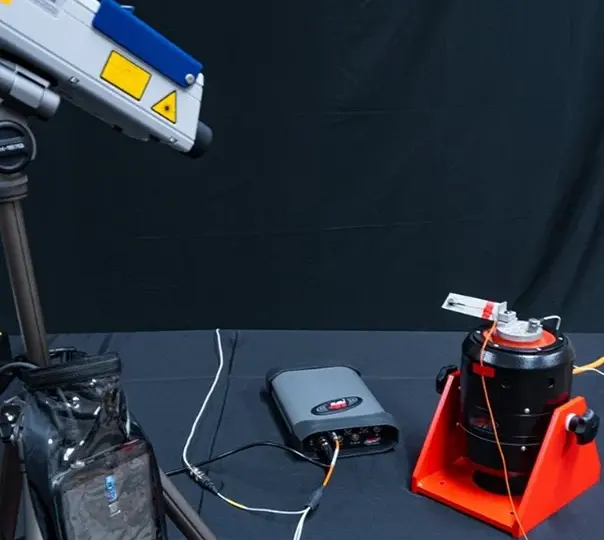
Figure 1: Optical measurement of turbine blade acceleration with both a laser vibrometer and simultaneously with the accelerometer attached to the tip of the turbine blade.

Laser vibrometer settings

Bandwidth: 1 kHz
High pass filter: 13 Hz
Velocity range: 1 m/s
Sensitivity: 250 mm/s/V
Optimal stand-off distance: 877 mm

A flat 1g sine sweep from 50 Hz to 500 Hz was conducted on the turbine blade at a 1 Octave/min sweep rate. The test was conducted with and without mass loading; the „mass“ in this case being the attached accelerometer.

In the first test, an accelerometer was attached to the end of the turbine blade (mass loading situation) to measure the resonances of the turbine blade. Simultaneously, the vibrometer was collecting data at the same location as the accelerometer (Figure 2).
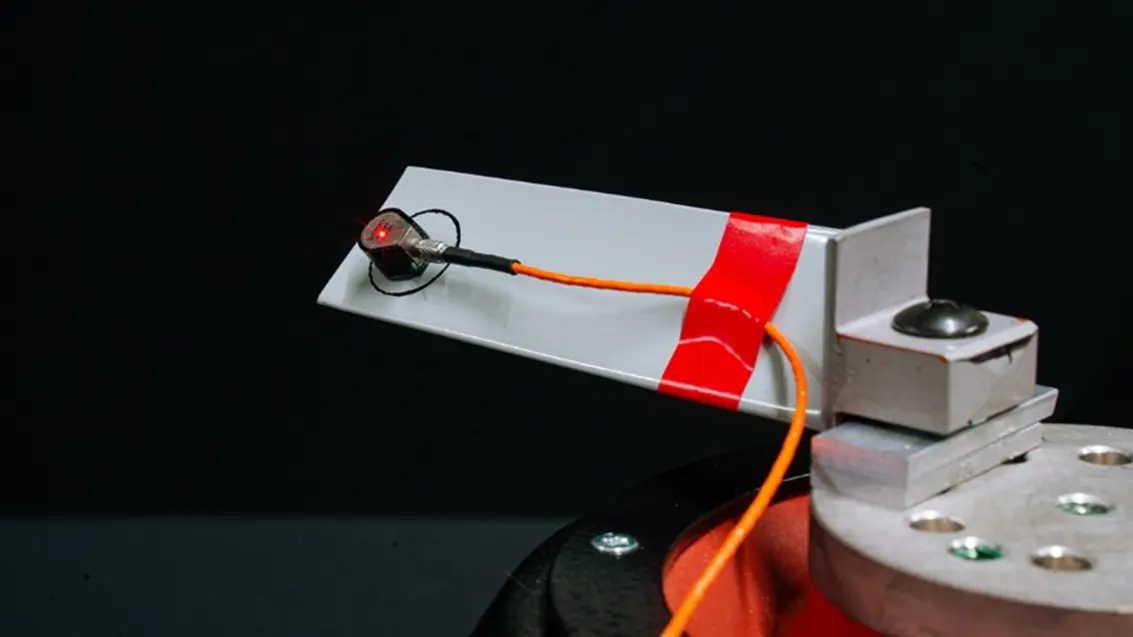
Figure 2: Turbine blade with an accelerometer attached to the tip. The laser’s light on the accelerometer shows that the VibroGo® (laser vibrometer) was measuring the accelerations of the turbine blade simultaneously.

In the second test, the accelerometer was removed (no mass loading) and the vibrometer collected the vibration data from the end of the turbine blade (Figure 3).
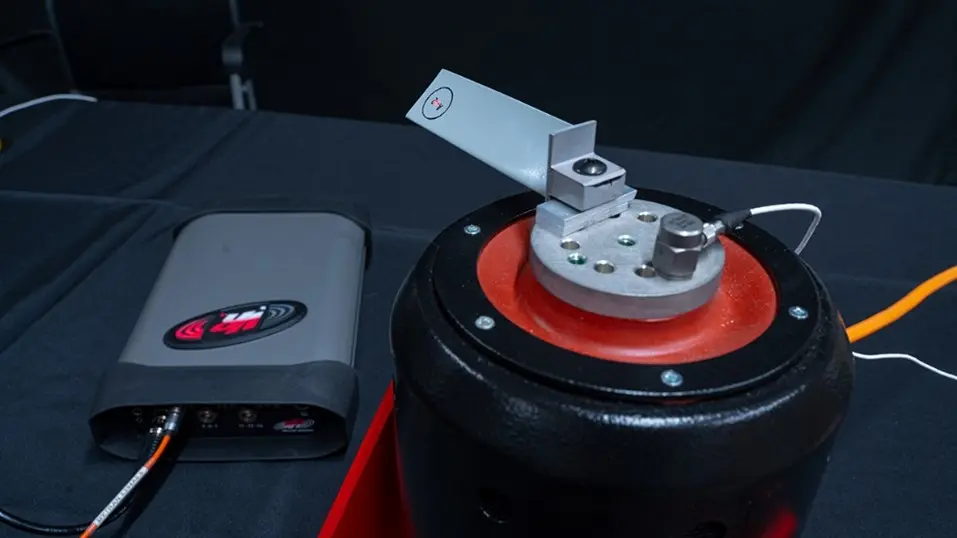
Figure 3: Turbine blade without accelerometer attached to the tip. In this case, VibroGo® (laser vibrometer) is the only vibration sensor, no mass loading.


The results of these tests were compared to confirm that the laser vibrometer could collect the same data as the accelerometer and confirm the effect of mass loading on a resonant beam.

Results

A flat 1g sine sweep test was conducted on the turbine blade, sweeping down from 500 Hz to 30 Hz at a 1-oct/min sweep rate. Several resonances were detected during this sine test. Both the accelerometer and the vibrometer were able to detect the same resonances (Figure 4).
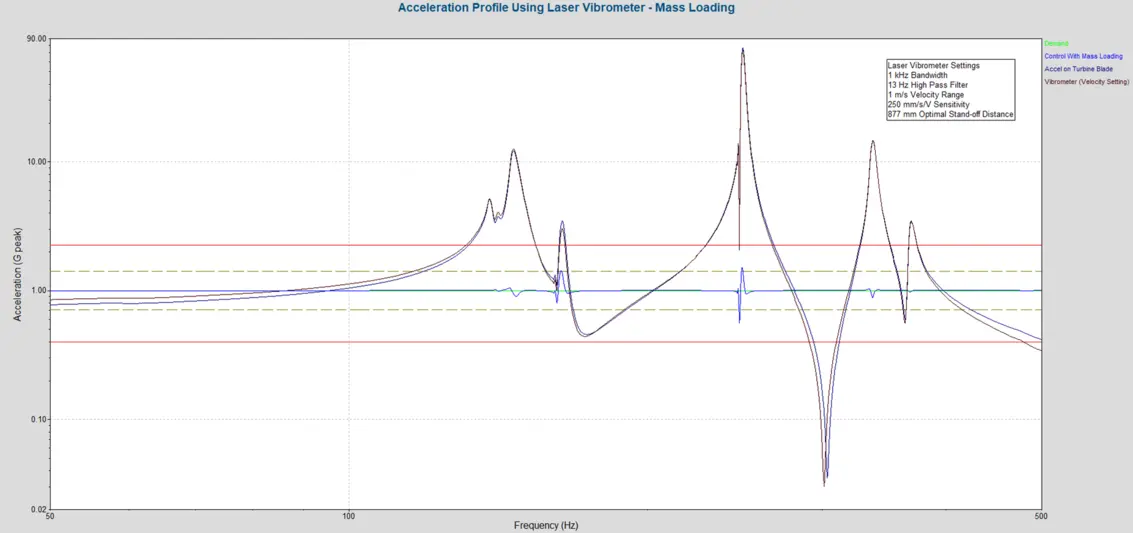
Figure 4: Comparison of vibration measurement acquired with both an accelerometer (blue) and a laser Doppler vibrometer (red).

The results of the testing demonstrate that mass loading causes a downward shift in the resonances of the turbine blade (Figure 5). This corroborates well with the fundamental single-DOF model (SDOF, single degree of freedom) that shows an inverse relationship between natural frequency and mass.
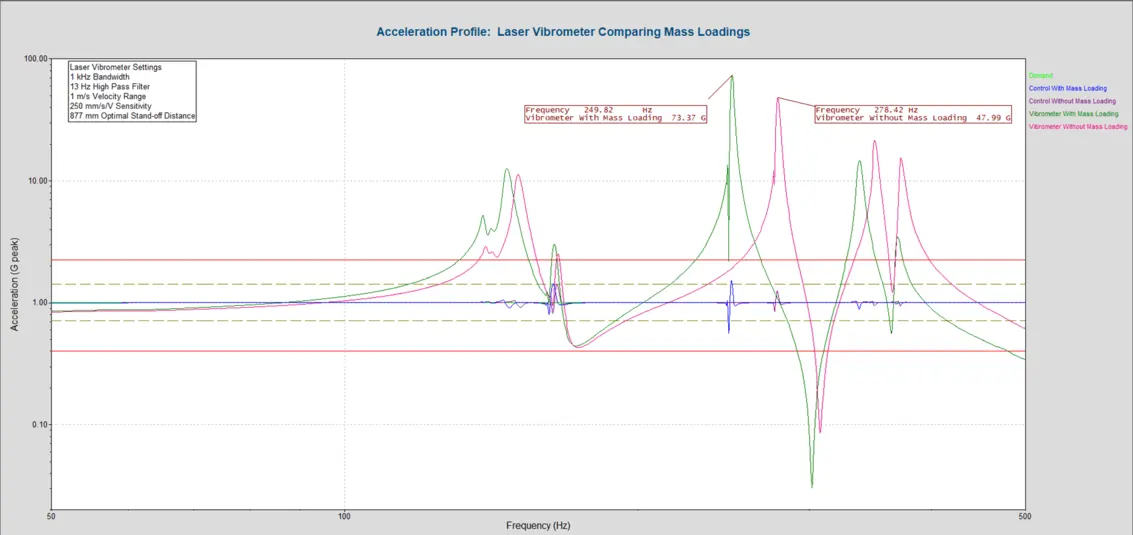
Figure 5: Laser vibrometer data for a vibrating turbine blade are compared. The vibrometer data ft he turbine blade with a mass on the end (green) ft he turbine blade have a lower resonant frequency than without the mass (pink) on the end ft he turbine blade.

The results also show that the controller was able to control better within tolerances when there was no mass on the turbine blade (Figure 6). Mass loading makes controlling through resonances more difficult.
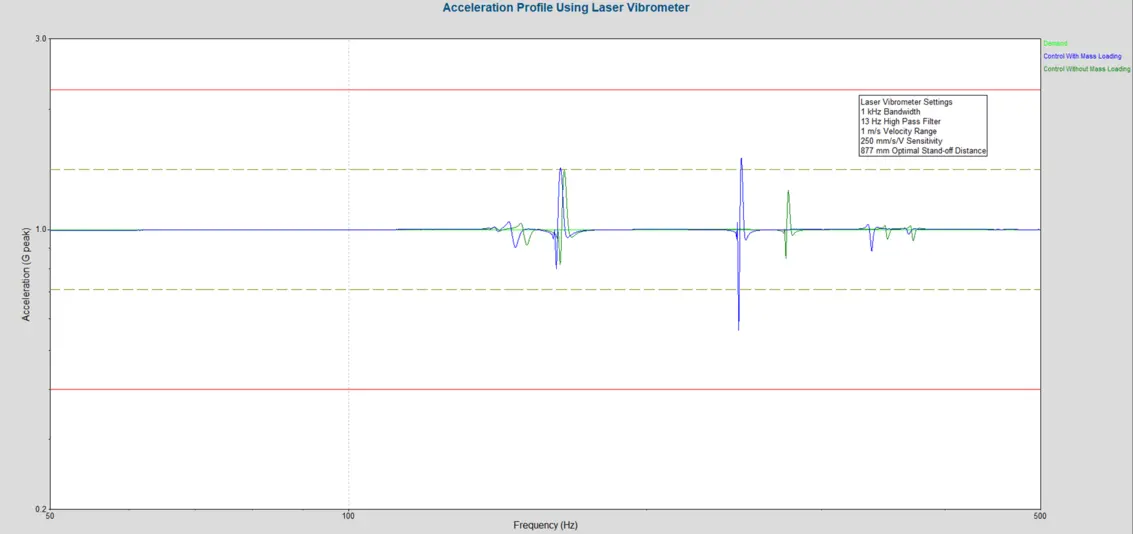
Figure 6: The control signal falls into tolerance better when there is no mass loading.


Conclusion

The underlying case study reveals three insights. First, the results show that a laser vibrometer can provide the same measurements as a traditional accelerometer. Second, the results show that the mass loading effect indeed is an issue that engineers need to address actively. The resonant frequencies of the turbine blade changed when the accelerometer was removed. Finally, the results show that a non-contact measurement technique such as laser Doppler vibrometry can accurately determine the resonant frequencies of a sample that is particularly susceptible to mass loading issues. By using the non-contact sensor for precise determination of the sample's resonant frequencies, the controller will also be able to better control through the resonances than when the turbine blade is affected by mass loading problems.


This article is an adaptation of the application note by www.VibrationResearch.com: Mass loading and benefits of a laser vibrometer.

Images courtesy: Images courtesy of the authors unless otherwise specified. Cover image: Aleksandr Grechanyuk/shutterstock.com

Our Authors

Vibration Research
Independent research lab
support@vibrationresearch.com

Related Articles

Laser-Doppler-Vibrometer set standards in the development of electric drives

Electric machines are increasingly being used as the primary drive technology in vehicles. The acoustic behavior of the drive is a key factor in the perceived quality of electric vehicles. Numerical method…

5 min

On self-supporting and self-aligning compact shakers

Artificial excitation is the basis for various noise and vibration techniques, from experimental modal analysis, over transfer path analysis, load identification, simulation model correlation, hybrid model…

10 min

Focus on impact detection of micrometeorites

The commercialization of space exploration increases the need for innovative technologies for space and planetary exploration and satellite missions. To ensure the safety and reliability of space structure…

6 min

Laser vibrometer based acoustic performance evaluation from -40° to 85°C

The increase of touchscreen interfaces in automotive applications leads to a visual overload of information that has serious safety implications. Haptic feedback technology is seen as an opportunity to imp…

5 min

Inertial shakers for modal testing

If you would like to test the vibration behavior of an object that is not vibrating by its own, you have to excite it externally. For modal tests both an electromagnetic shaker and a modal hammer are commo…

6 min

How to measure low-frequency acoustic communication of African elephants

A recent study published in the European Physical Journal Special Topics introduces a pioneering application of laser Doppler vibrometry (LDV) to better comprehend African elephant vocalizations and their …

4 min

How singing capacitors affect the audio experience in consumer electronics

Everybody enjoys good sound quality on a mobile device when watching a show or when communicating with friends and family or in a business environment. On the other hand, we cringe when something is off wi…

3 min

Single electrode transduction of contour modes in piezoelectric disk resonators

Piezoelectric disk resonators are designed to transduce specific contour mode bulk acoustic wave (BAW) resonant shapes. Utilizing a unique property of lead magnesium niobite-lead titanate (PMN-PT) thin fil…

4 min

LDV based displacement sensor AFM enables more quantitative measurements

Atomic Force Microscopy (AFM) is a powerful and versatile nanoscale imaging technique that has revolutionized our understanding of surfaces and materials at the atomic and molecular scale. By enabling high…

8 min

Celebrating the iconic career of Professor Rong Z. Gan

We had a chance to virtually sit down for an interview with Prof. Rong Zhu Gan. In her field, she is one of those personalities that needs no introduction. For the uninitiated, she is the George Lynn Cross…

3 min

Using toys to investigate the complex physics of quasi-periodic metamaterials

Metamaterials are artificial assemblies of known materials in particular arrangements that result in novel properties not encountered in naturally occurring materials. Among many applications, they hold gr…

6 min

Boundary conditions, measurement inaccuracy, and repeatability

MAN Energy Solutions offers a comprehensive engine portfolio, propeller, and stern equipment and turbochargers for the maritime sector. Reliability is an essential aspect of our sector and especially vital…

5 min

A modal-based monitoring system

More and more, the increasing stress on infrastructures provides the challenge of investigating and evaluating the existing structures with regard to safety and the resulting remaining useful life. Reliabl…

5 min

Non-contact alternative to dynamic and viscoelastic mechanical testing in cartilage

Osteoarthritis, a degenerative disease in the joint, is a condition that is afflicting approximately 14% of adults. Understanding the dynamics of the joint cartilage is crucial for research and for finding…

6 min

Frequency response function measurement using QTec® multi-path interferometry

The measurement of frequency response function (FRF) plays an important role for the dynamic characterization of structures. In most cases, the goal is the measurement-based analysis of a system or the det…

7 min

Analyzing operational deflection shapes on loudspeakers

Noise protection and control play a major role in both professional and private environments. Airborne sound measurements help identify acoustic paths as a means of noise reduction as standard testing meth…

4 min

Manipulation of complex fluids with SAW-based acoustofluidics

Surface acoustic wave (SAW)-based acoustofluidics combines microfluidics with active microacoustic fields. This allows to realize numerous Lab-on-a-Chip operations, reaching from fluid manipulation includi…

3 min

A new driving mechanism for acoustofluidics*

Acoustofluidics is the active manipulation of fluids as well as of immersed particles or cells at the micro- and nanoscale and is a key technology for life sciences. Acoustic waves, more precisely, ultraso…

5 min

Laser vibrometry visualizing haptic feedback

The smartphone has shown that buttons can be replaced without sacrificing comfort. The freely configurable display with gesture control has made it even easier to switch between applications. Hap2U drives …

7 min

Noise and modal analysis for quiet and reliable operation

The growth of the drone market is multi-faceted: growing concerns about national and border security drive the need for advanced aerial surveillance, package delivery services experience an increased deman…

6 min

Measurements using broadband piezoelectric excitation

The following article compares various forms of force excitation in order to determine the transfer admittances of mechanical systems using a gear wheel as an example. The objective is to analyze and asses…

4 min

Determining the dynamic characteristics of an aircraft’s large-scale, adaptive compliant wing slat section prototype

The SADE project studied “smart” morphing mechanical elements of next generation wings, which was aimed at improving aerodynamic performance, fuel efficiency, as well as reducing noise and emissions in all…

3 min

Acoustic radiation of vibrating surfaces in electric drive systems

The growing electric and hybrid vehicles market faces new demands on product acoustic quality. The acoustical emission behavior of electric drivetrains is clearly different from that of conventional drives…

4 min

Vibration analysis helps to protect art

To organize traveling exhibitions, museums like the Georgia O’Keeffe Museum in Santa Fe, New Mexico supplement their own collection with temporary loans from other museums and private collections. In 2017,…

4 min

Experimental modal test with laser vibrometers

The validation of simulation models is an important application area of laser vibrometers. To do this, the geometric data from a finite element mesh is loaded into the software of the measurement system an…

4 min

3D scanning laser Doppler vibrometry for fuel-efficient turbines

Fuel consumption of aircrafts is a hot topic in the current discussion about global climate change. An important factor is the design of the aircraft engine itself. In order to reduce weight and build more…

6 min

Xtra 3D scanning vibrometry on rolling tires

Dynamic 3D operational deflection shapes captured with an Xtra Scanning Vibrometer help reveal the source of rolling tire noise. For a wide range of driving conditions, rolling tires stimulate a significan…

5 min
Load More