Back
Acoustics & ultrasonics
Automotive & aerospace
General R&D
Mechanical & precision engineering

Incredibly quiet thanks to precise analysis of vibration characteristics

Laser-Doppler-Vibrometer set standards in the development of electric drives

Why the acoustics of electric drives are crucial

Electric machines are increasingly being used as the primary drive technology in vehicles. The acoustic behavior of the drive is a key factor in the perceived quality of electric vehicles. Numerical methods for evaluating and optimizing acoustic behavior are therefore used early in the development of electric drives. The structural-dynamic response of the motor plays an important role in the evaluation of amplitudes. As the predictive capability of current damping models is limited, especially for electric drives, efficient measurement methods are required for model validation.

In electric drives, acoustic excitations occur in the entire audible frequency range. For example, the control of the machine with modern power electronics generates forces and noises in the higher kHz range, which are often perceived as particularly disturbing. This poses challenges for the experimental investigation of electric drives.

Many measuring points are required to clearly reconstruct the sometimes complex deflection shapes in the higher frequency range. In addition, the behavior of electrical machines is sometimes non-linear due to their mechanical structure.

With Polytec's state-of-the-art robot-assisted 3D laser Doppler vibrometers, it is possible to provide an answer to these particular challenges in the acoustic analysis of electric drives. The optical measurement method minimizes the influence of the test setup on the measurement results and simultaneously records an almost unlimited number of measurement points. Laser Doppler vibrometers with QTec technology enable a significantly increased signal-to-noise ratio. This reduces the measurement time, increases the evaluable frequency range and enables reliable attenuation estimation.

The properties described above are examined below using the example of the experimental modal analysis of an electric drive.

Precision in perfection: How vibrations are made visible

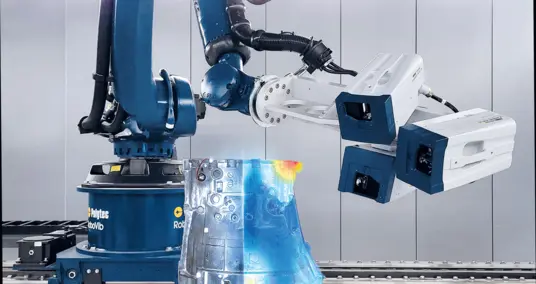
The experimental modal analysis is carried out in the fully automated RoboVib test center. The aim of the experimental modal analysis is to describe the structural-dynamic transmission behavior based on the natural frequencies, eigenvectors and damping and to compare it with the numerical model. 

Figure 1 and Figure 2 show two selected test setups from the measurement campaign. The electric drive is elastically suspended with springs to reduce external influences. The spring stiffness of the suspension is selected so that the natural frequency of the suspension is sufficiently far away from the first expected natural frequency of the machine to minimize the influence of the suspension on the damping behavior of the machine.
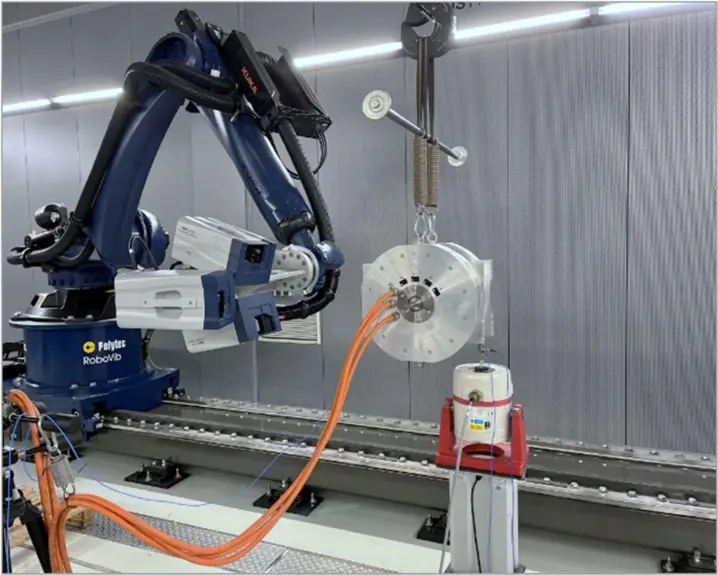
Figure 1: Setup in the RoboVib test center with PSV Xtra and shaker

Various methods and excitation signals are available for the defined excitation of the machine in the modal analysis. On the one hand, excitation with a shaker from LDS using pseudo-noise and white noise and, on the other hand, excitation using an automatic modal hammer from NV-Tech are investigated. To avoid plastic deformation when using the automatic modal hammer, thin hardened steel plates are attached to the excitation points. The points for optimal excitation of the structure are determined in advance using specially developed methods, considering the test boundary conditions in the numerical model.

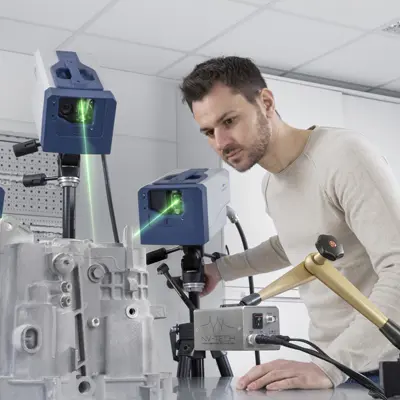
Two different laser Doppler vibrometers (PSV Xtra and PSV QTec) are used in the RoboVib test center to measure the vibration response.
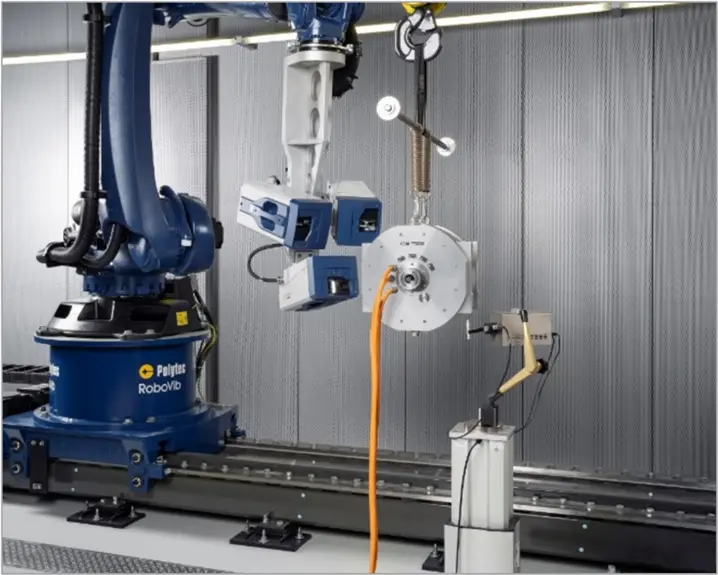
Figure 2: Setup in the RoboVib test center with PSV QTec and automatic modal hammer


Due to the curved surface of the electrical machine, different positions of the vibrometer must be used for optical measurement. The RoboVib measurement system performs these measurements with repeat accuracy and fully automatically with a total of 17 positions (see video).

How QTec technology is revolutionizing signal quality

Figure 4 shows an example of the results of a transfer function to compare the test setups: excitation using a shaker or automatic modal hammer and measurement of the vibration response using the PSV Xtra or the PSV QTec.

The setup with shaker and PSV Xtra shows a strong noise component in the transfer function in the entire frequency range. In contrast, the noise component can be significantly reduced when using the QTec system. The use of an automatic modal hammer instead of the shaker leads to a further improvement in the quality of the measurement data. 
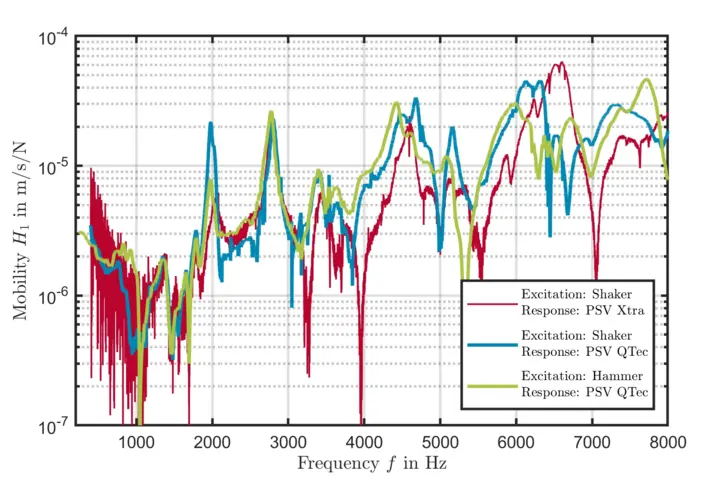
Figure 4: Comparison of the transfer functions for different test configurations

Figures 5 and 6 show the time signals of the measured surface velocity with and without QTec technology for a selected measurement point when excited with the automatic modal hammer. Due to the test setup and the necessary elastic mountings, the transverse movements of the machine lead to signal drop-outs if no QTec is used.

QTec's multi-path detection can completely avoid these signal drop-outs and thus significantly improve the signal quality for this application.
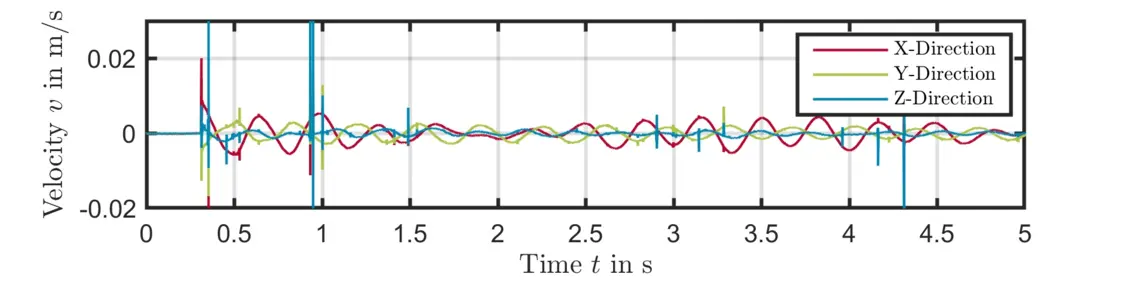
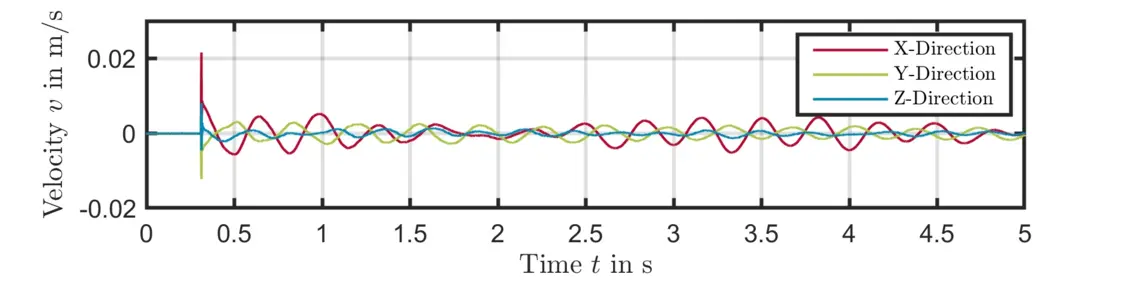
Figure 5: Response signal: QTec deactivated
Figure 6: Response signal: QTec activated

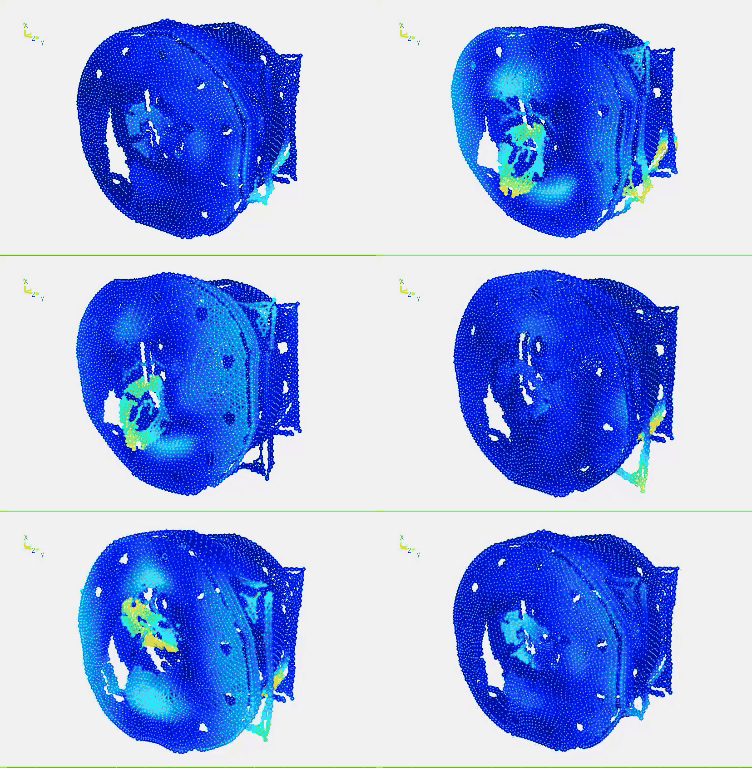
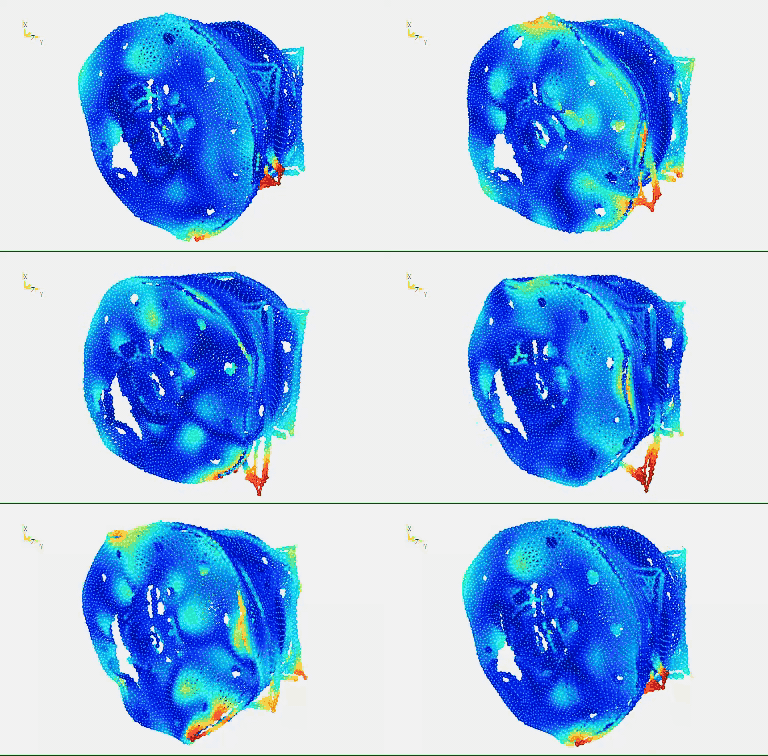
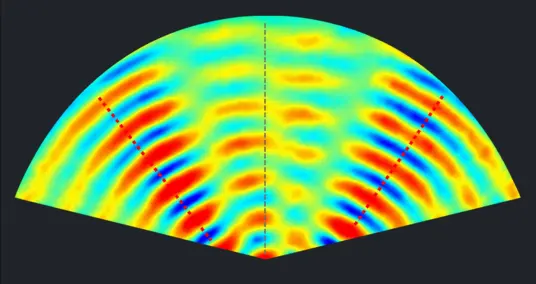
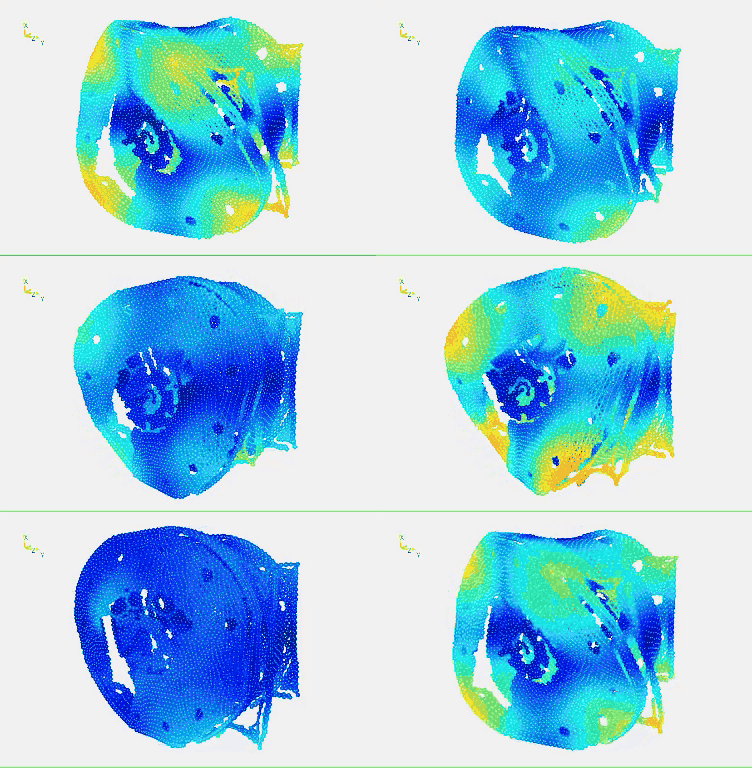
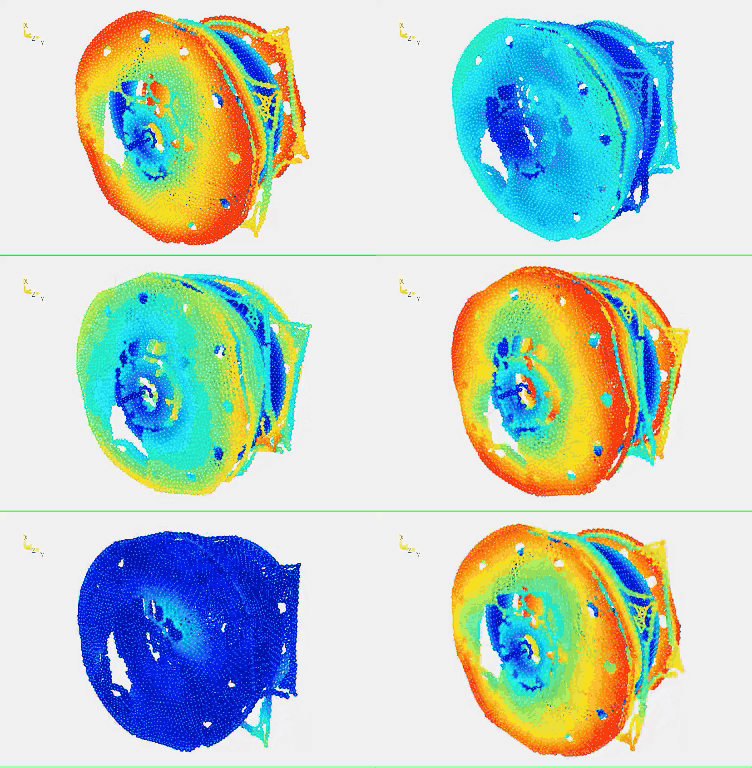
Overall, the test setup with automatic modal hammer and QTec vibrometer makes it possible to carry out an experimental modal analysis of the electrical machine up to 12 kHz. The following illustrations show exemplary deflection shapes at selected resonance frequencies of 2.8 and 4.6 kHz as well as 6.2 and 9.8 kHz.
Limits of simulation: what we learn from measurements

A correlation between measurement and simulation shows for a frequency, for example, that there is a high degree of agreement between the model and measurement on the front of the machine (Figure 9a). On the rear side of the machine (Figure 9b), the mode shapes do not match locally. This suggests that with current modeling methods, the influence of the wiring of the electrical machine cannot be sufficiently taken into account in this frequency range.
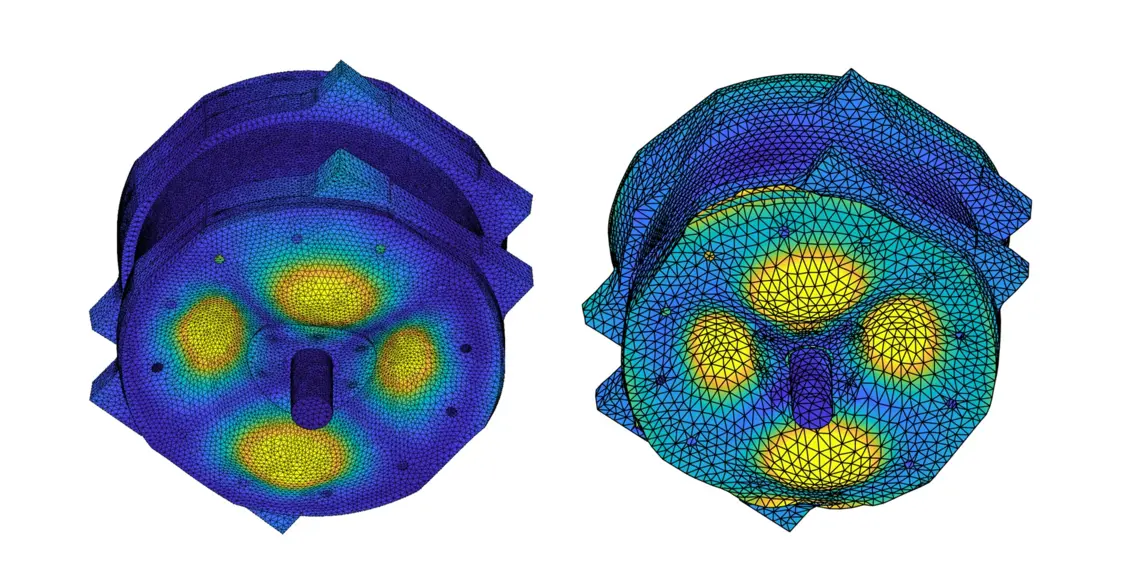
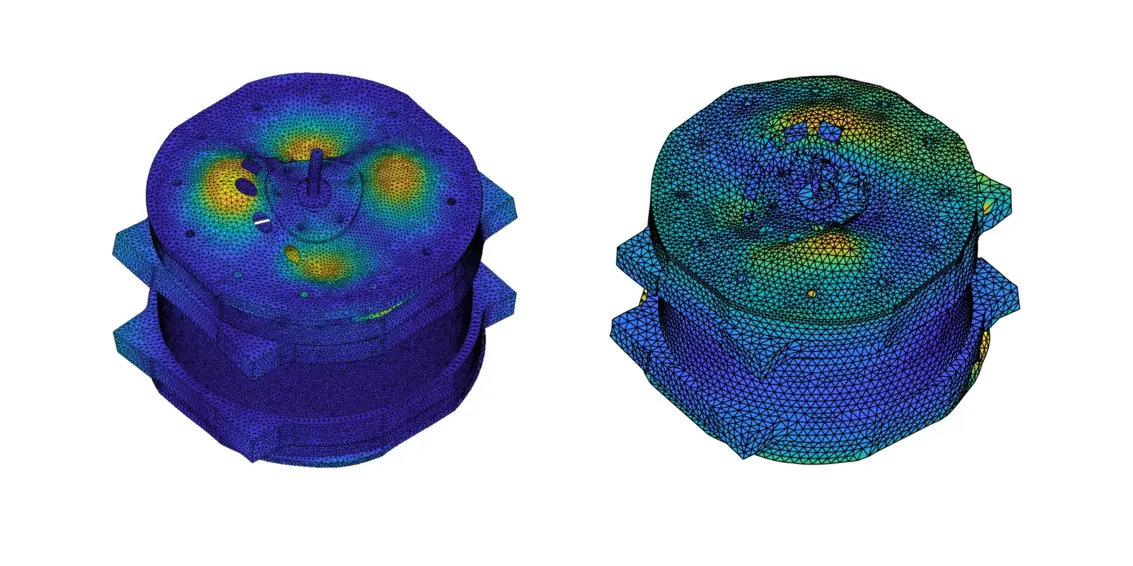
Figure 9a: Comparison of eigenvectors from simulation and measurement on the drive side at 4.1 kHz
Figure 9b: Comparison of eigenvectors from simulation and measurement on the rear side at 4.1 kHz

To summarize: New standards for acoustic analysis

With the latest robot-assisted 3D laser Doppler vibrometers from Polytec, it is possible to provide an answer to the special challenges in the acoustic analysis of electric drives. Thanks to the complete automation of the measurement, enough measuring points can be realized for the higher kHz range. The optical measurement method minimizes the influence of the test setup on the measurement results. The signal-to-noise ratio can be significantly increased using laser Doppler vibrometers with QTec technology. This reduces the measurement time, increases the evaluable frequency range and provides a reliable attenuation estimate.

A correlation with numerical models also shows that the vibration behavior of electrical machines cannot be described with high accuracy over the entire frequency range using current calculation methods. This means that the current calculation methods cannot completely replace a measurement. 

Images courtesy: Images courtesy of the authors unless otherwise specified. Cover image: Tom / stock.adobe.com

Our Authors

Dr.-Ing. Marius Franck
Team Manager, Electric Powertrain FEV Europe GmbH
franck_m@fev.com
M. Eng. Dennis Berft
Application Services Business Unit Vibrometry, Polytec GmbH, Germany
info@polytec.de

Related Articles

Decrypting the machine physics with the 3D laser Doppler vibrometer

Feeding technology is a key process in automated production. In order to develop feeding systems using simulation, the machine’s physics must be known. As a specialist in feeding technology, the RNA Group …

5 min

Optimized manufacturing processes for optical free-form surfaces

The use of optical free-form surfaces allows complex lens systems to be simplified and thus made more compact and weight-optimized. In addition, the use of optical freeform surfaces enables the realization…

4 min

On self-supporting and self-aligning compact shakers

Artificial excitation is the basis for various noise and vibration techniques, from experimental modal analysis, over transfer path analysis, load identification, simulation model correlation, hybrid model…

10 min

Focus on impact detection of micrometeorites

The commercialization of space exploration increases the need for innovative technologies for space and planetary exploration and satellite missions. To ensure the safety and reliability of space structure…

6 min

Laser vibrometer based acoustic performance evaluation from -40° to 85°C

The increase of touchscreen interfaces in automotive applications leads to a visual overload of information that has serious safety implications. Haptic feedback technology is seen as an opportunity to imp…

5 min

Inertial shakers for modal testing

If you would like to test the vibration behavior of an object that is not vibrating by its own, you have to excite it externally. For modal tests both an electromagnetic shaker and a modal hammer are commo…

6 min

How to measure low-frequency acoustic communication of African elephants

A recent study published in the European Physical Journal Special Topics introduces a pioneering application of laser Doppler vibrometry (LDV) to better comprehend African elephant vocalizations and their …

4 min

How singing capacitors affect the audio experience in consumer electronics

Everybody enjoys good sound quality on a mobile device when watching a show or when communicating with friends and family or in a business environment. On the other hand, we cringe when something is off wi…

3 min

When to choose a laser Doppler vibrometer for vibration measurement

In the realm of vibration testing, a significant obstacle arises in the form of mass loading. The behavior of a dynamic vibration sample, or device under test (DUT), is profoundly influenced by the additio…

5 min

Single electrode transduction of contour modes in piezoelectric disk resonators

Piezoelectric disk resonators are designed to transduce specific contour mode bulk acoustic wave (BAW) resonant shapes. Utilizing a unique property of lead magnesium niobite-lead titanate (PMN-PT) thin fil…

4 min

How shear shock waves influence perception

Haptic holography or mid-air haptics promises to bring virtual reality to life, but a new study reveals a surprising physical obstacle that will need to be overcome. A research team at UC Santa Barbara has…

6 min

Celebrating the iconic career of Professor Rong Z. Gan

We had a chance to virtually sit down for an interview with Prof. Rong Zhu Gan. In her field, she is one of those personalities that needs no introduction. For the uninitiated, she is the George Lynn Cross…

3 min

Boundary conditions, measurement inaccuracy, and repeatability

MAN Energy Solutions offers a comprehensive engine portfolio, propeller, and stern equipment and turbochargers for the maritime sector. Reliability is an essential aspect of our sector and especially vital…

5 min

A modal-based monitoring system

More and more, the increasing stress on infrastructures provides the challenge of investigating and evaluating the existing structures with regard to safety and the resulting remaining useful life. Reliabl…

5 min

Non-contact alternative to dynamic and viscoelastic mechanical testing in cartilage

Osteoarthritis, a degenerative disease in the joint, is a condition that is afflicting approximately 14% of adults. Understanding the dynamics of the joint cartilage is crucial for research and for finding…

6 min

Frequency response function measurement using QTec® multi-path interferometry

The measurement of frequency response function (FRF) plays an important role for the dynamic characterization of structures. In most cases, the goal is the measurement-based analysis of a system or the det…

7 min

Analyzing operational deflection shapes on loudspeakers

Noise protection and control play a major role in both professional and private environments. Airborne sound measurements help identify acoustic paths as a means of noise reduction as standard testing meth…

4 min

Manipulation of complex fluids with SAW-based acoustofluidics

Surface acoustic wave (SAW)-based acoustofluidics combines microfluidics with active microacoustic fields. This allows to realize numerous Lab-on-a-Chip operations, reaching from fluid manipulation includi…

3 min

A new driving mechanism for acoustofluidics*

Acoustofluidics is the active manipulation of fluids as well as of immersed particles or cells at the micro- and nanoscale and is a key technology for life sciences. Acoustic waves, more precisely, ultraso…

5 min

Laser vibrometry visualizing haptic feedback

The smartphone has shown that buttons can be replaced without sacrificing comfort. The freely configurable display with gesture control has made it even easier to switch between applications. Hap2U drives …

7 min

Noise and modal analysis for quiet and reliable operation

The growth of the drone market is multi-faceted: growing concerns about national and border security drive the need for advanced aerial surveillance, package delivery services experience an increased deman…

6 min

Measurements using broadband piezoelectric excitation

The following article compares various forms of force excitation in order to determine the transfer admittances of mechanical systems using a gear wheel as an example. The objective is to analyze and asses…

4 min

Determining the dynamic characteristics of an aircraft’s large-scale, adaptive compliant wing slat section prototype

The SADE project studied “smart” morphing mechanical elements of next generation wings, which was aimed at improving aerodynamic performance, fuel efficiency, as well as reducing noise and emissions in all…

3 min

Acoustic radiation of vibrating surfaces in electric drive systems

The growing electric and hybrid vehicles market faces new demands on product acoustic quality. The acoustical emission behavior of electric drivetrains is clearly different from that of conventional drives…

4 min

Vibration analysis helps to protect art

To organize traveling exhibitions, museums like the Georgia O’Keeffe Museum in Santa Fe, New Mexico supplement their own collection with temporary loans from other museums and private collections. In 2017,…

4 min

Experimental modal test with laser vibrometers

The validation of simulation models is an important application area of laser vibrometers. To do this, the geometric data from a finite element mesh is loaded into the software of the measurement system an…

4 min

3D scanning laser Doppler vibrometry for fuel-efficient turbines

Fuel consumption of aircrafts is a hot topic in the current discussion about global climate change. An important factor is the design of the aircraft engine itself. In order to reduce weight and build more…

6 min

Xtra 3D scanning vibrometry on rolling tires

Dynamic 3D operational deflection shapes captured with an Xtra Scanning Vibrometer help reveal the source of rolling tire noise. For a wide range of driving conditions, rolling tires stimulate a significan…

5 min
Load More